

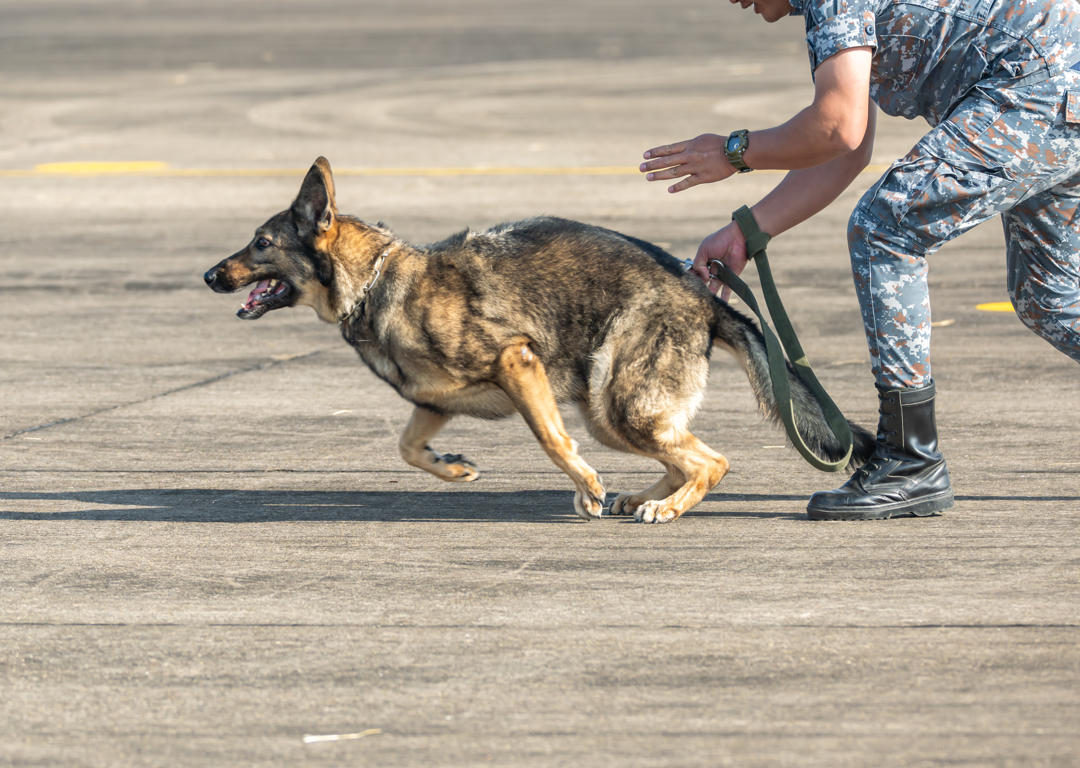

If you have ever shared your life with a dog, you already know how special they are. They are loyal, dedicated, and capable of forming bonds that run deep. I spent eight years in the military working with specialized K9s. I saw dogs follow handlers into high-pressure situations, search for explosives, and put themselves on the line for their people. That level of devotion is real, and it is a big part of why I do this work today.
At the end of the day, you are the person who makes the world feel safe for your dog.
There is another side to dogs, though, and it often catches owners off guard: dogs are self-interested.
That does not make them bad, aggressive, or spiteful. It just means they are hardwired to look out for their own needs. Dogs are quick to read a room, figure out patterns, and test situations to get what they want. They just happen to do it while looking adorable. The puppy eyes, the dramatic sigh, or the sudden limp that vanishes the second the leash comes out are all simple tactics that work on us.
Take my own house as an example.
My wife, my son, and I have a bedtime routine. My wife gets our son through bath time, and I head upstairs to sit with him until he falls asleep. While I am upstairs, my black lab, Vesta, will sit by my wife, look her dead in the eye, and act like she has not eaten all day. My wife feels bad and gives her food. Meanwhile, I am upstairs knowing full well that I fed Vesta right before bath time started.
Is my dog lying? No.
Is she advocating for her own interests? Absolutely.
This is where a lot of dog owners get stuck. We want to believe our dogs are purely selfless and always innocent. But dogs are complex animals. They have quirks, fears, daily habits, and stress responses just like we do. The difference is they cannot talk to us, and they cannot sit down to explain what they need.
That is where my job comes in.
I spend most of my time acting as a translator between you and your dog. Only one of you can learn a new language. Your dog cannot tell you why they bark at neighbors, pull toward other dogs, or lose their mind when someone knocks on the front door. They communicate entirely through their behavior. When an owner does not understand that behavior, the dog gets labeled as stubborn, dominant, or hardheaded.
You might have seen videos online of dogs tapping buttons on the floor to string words together. While that is fun to watch, it is not how real life works. Most dogs rely completely on us to read the room, understand what they are trying to say, and respond clearly.
This is why balanced, relationship-based training matters.
Good training is not about muscle, control, or being heavy-handed. It is about clarity.
When a dog understands the rules, their stress drops. When expectations stay consistent, anxiety goes down. When you set fair boundaries and communicate clearly, you build genuine trust.
Trust changes how you live with your dog:
- When you trust your dog, you can give them freedom.
- When your dog trusts you, they want to work with you.
That trust does not come from handing out endless treats, nor does it come from constant corrections. It comes from being a steady, calm leader who makes solid decisions. You do not have to replace affection with structure; you just use structure to support the relationship. Dogs do not need us to be flawless. They just need us to make sense.
At Misfits Dog Training in Hampton Roads, the goal is never to “fix” your dog. Your dog is not broken. Our focus is to clear up the miscommunication, teach you how to handle everyday moments, and build a partnership where you and your dog both feel confident.
Dogs are loving. Dogs look out for themselves. And when you guide them with clear communication, fairness, and trust, they will give you their absolute best.
Ready to build a clearer relationship with your dog? Schedule a training consultation with Craig Penny in Hampton Roads today.