

If you walk your dog after dinner in Castle Rock, you’ve probably seen one. A coyote trots across a cul-de-sac in Crystal Valley Ranch, or stands at the edge of the open space behind The Meadows like it owns the place. Most of the time it moves on. Sometimes it sits down and watches you, and that’s usually when people start texting us.
Coyotes live here year round. Our neighborhoods back right up to open space, drainage corridors and trail systems, and that land is full of rabbits and mice. The coyotes have also figured out that people mostly leave them alone. That doesn’t make your walk dangerous, but it does mean you should walk a little differently than you would in the middle of Denver.
Below is what we tell our Castle Rock clients about when coyotes are most active, how to read what one is doing, what to bring on an evening walk, and the training that turns an encounter into something your dog barely reacts to.
Why your evening walk matters more this time of year
Coyotes are most active between dusk and dawn, and in the fall that window starts sliding into the hours most of us walk our dogs. Daylight saving time ends on November 1, and the 5:30 walk that was in daylight last week will suddenly happen in the dark.
Fall is also when the pups born last spring are grown and heading out to find territory of their own. Young coyotes on the move tend to be bolder and a little clumsier about people, so you may notice more of them around the edges of neighborhoods.
Winter brings another shift. According to Colorado Parks and Wildlife, breeding season runs from January through March and pups arrive from April to mid-May (FOX31). During breeding season coyotes guard their territory and can see any dog, large or small, as a threat. CPW gets plenty of calls from people who were followed by a coyote while walking a dog, and in most cases the coyote just tails them until they’ve left the area it considers its own (FOX31).
Small dogs carry a separate risk. CPW notes that cats and small dogs can look like prey at any time of year (Denver7), so if your dog is small enough to pick up, every evening walk near open space is a walk where you keep them close.
What the coyote is telling you
Most sightings look scarier than they are. A coyote that stops, looks at you and keeps going is just passing through. One that follows at a distance is usually walking you out of its territory, especially in winter. Keep moving, keep your dog close, and head away from the open space toward the street.
Some behavior calls for a stronger response. A coyote that closes the distance, circles around you, or comes straight at your dog is testing you. So is the one that shows up on the same corner every night and doesn’t budge when you walk by. That animal has learned people aren’t a problem, and the section on hazing below is how you change its mind.
Your dog will often spot the coyote before you do. Watch for a sudden stiff stop with the head locked in one direction and the ears pushed forward, sometimes with a low growl or a high-pitched whine. If your dog does that on a dark walk and you can’t see why, assume something is out there and turn around.
Leash and gear for evening walks
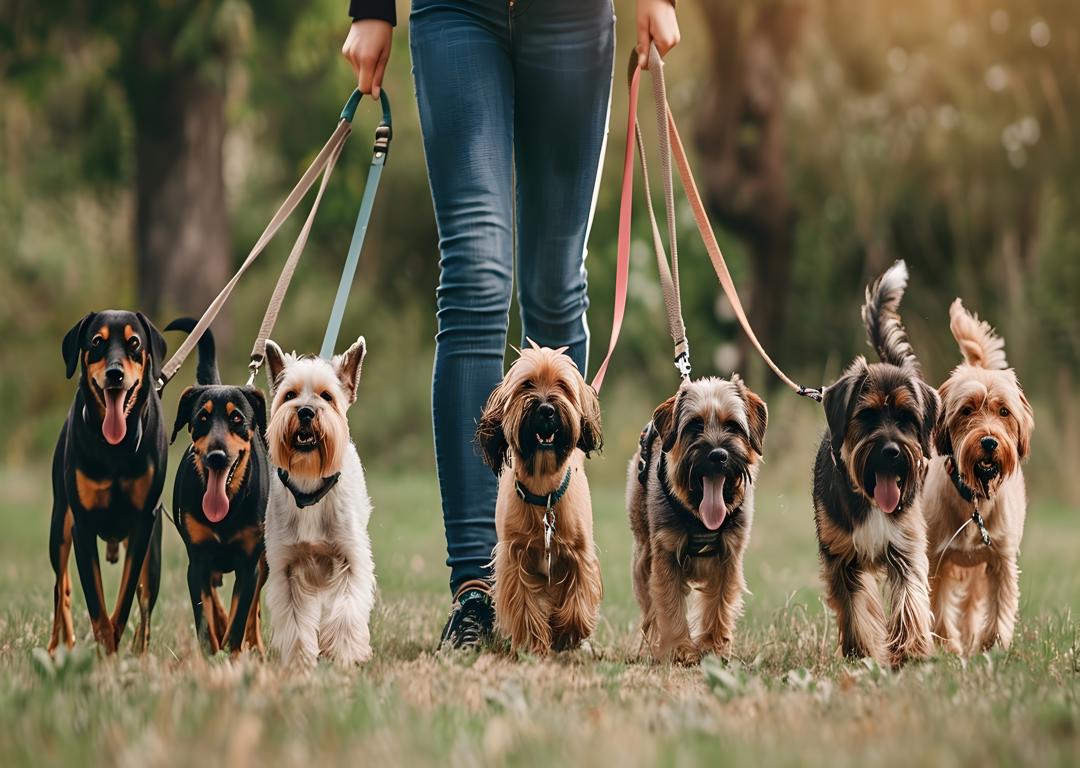
Use a regular 6 foot leash. CPW recommends keeping pets on a short leash in coyote country (CPW tips via KMAX), and it’s the easiest change you can make. Retractable leashes are the worst choice for this. A dog 20 feet out on a thin cord is hard to reel in, and in the dark you can lose track of exactly where they are.
Fit matters more than brand. If your dog panics and backs up, a loose collar slides right over the head. Check that the collar or harness is snug before the days get shorter, and if your dog has slipped out of something before, switch to a martingale or a harness built to stop that.
Carry a real flashlight or a headlamp. Coyote eyes reflect light, and catching a pair of eyes at the edge of a trail 50 yards out gives you time to turn around calmly. A light-up collar helps you keep track of your own dog, and a whistle in your pocket is handy for the hazing we cover below.
Think about your route, too. Coyotes travel along open space edges, creek corridors and greenbelts. On dark winter evenings the sidewalk loop through the middle of your neighborhood is the better choice, and the East Plum Creek Trail and the open space paths can wait for daylight.
The training that keeps an encounter boring
When a coyote encounter goes badly, the dog’s reaction is usually the reason. A dog that lunges and barks at a coyote is inviting the exact interaction you want to avoid, and a dog that slips its collar and gives chase is in real trouble. Coyotes are fast, they know the ground better than your dog does, and they sometimes travel in pairs.
These are the skills we work on with Castle Rock dogs who walk near open space.
An emergency U-turn
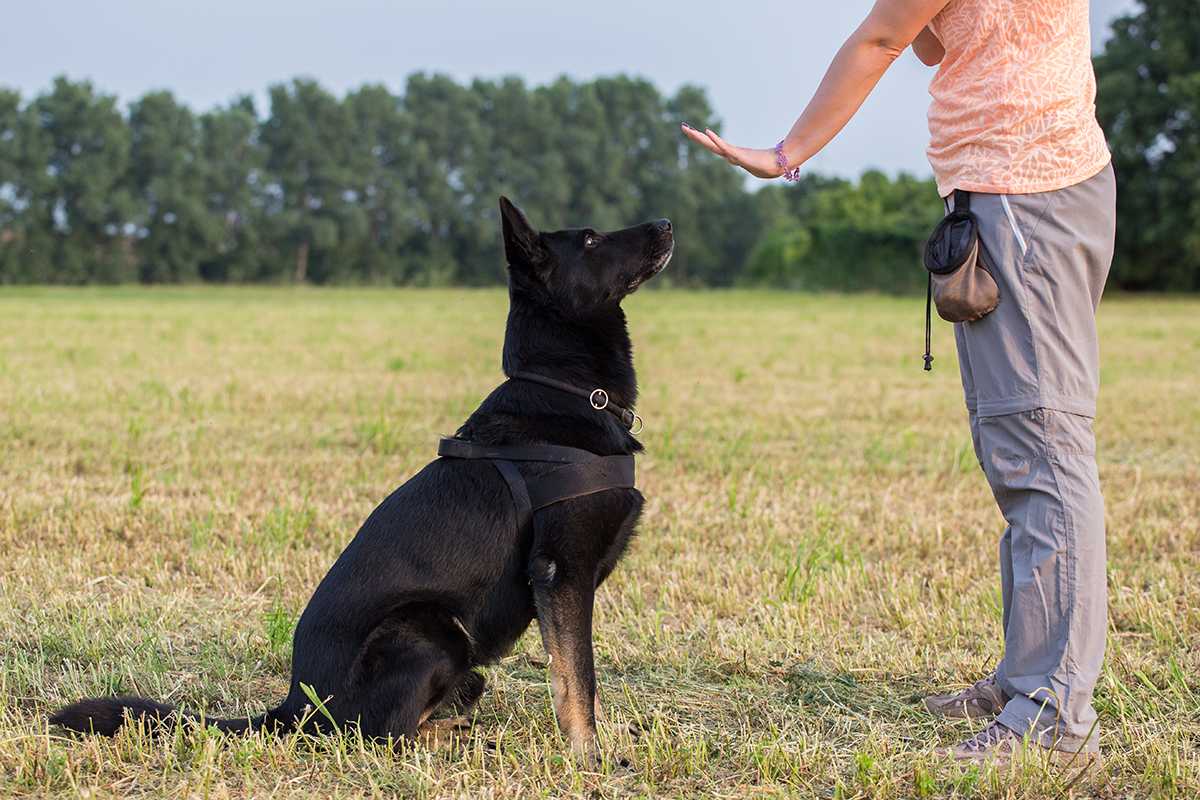
Pick a cue like “let’s go” that means turn around with me right now. Teach it in the living room first, then on quiet walks. Say the cue in a cheerful voice, pivot and walk the other way, and reward your dog the second they turn with you. With enough repetition it becomes a reflex, and that’s what you want. When you spot a coyote you don’t want to negotiate. You want your dog already turning with you before they’ve fully locked on.
Looking at you on cue
A dog that can glance back at you while something exciting is out there is far easier to handle. We teach dogs to turn and look at their handler on a cue, starting with small distractions like a leaf blowing by and working up to dogs and squirrels across the street. By the time your dog can look away from a rabbit when you ask, a coyote 100 yards off is a lot more manageable.
A recall that holds up when it counts
Your dog should be on leash after dark anyway. Recall is for the night the leash slips out of a cold hand or someone leaves the gate open. Coming when called at the park on a sunny Saturday is very different from coming when called while staring at a coyote, and closing that gap is most of what we do in our off-leash recall and trail manners training. We practice around real distractions for exactly that reason.
If your dog already goes over the top at other dogs, cats or wildlife on walks, start there. Leash reactivity makes every coyote encounter harder, and our reactivity and aggression training page explains how we work with those dogs.
What to do if a coyote comes toward you
If you have a small dog, pick it up right away. Bring a bigger dog in tight against your leg on a short leash and try to keep yourself between your dog and the coyote.
Then haze it. CPW’s advice is to make yourself big and loud by shouting, waving your arms, clapping and throwing something toward it, and to avoid running or turning your back (Denver Gazette). Face the coyote and back away slowly toward a street or a lit area.
Yelling at a coyote in a quiet neighborhood at 7 p.m. feels a little ridiculous the first time. Do it anyway. A coyote that gets chased off learns that people with dogs are worth avoiding, and that helps every dog owner on your street.
Most coyotes leave once you get loud. If one keeps coming at people, report it. CPW asks residents to report aggressive coyote behavior toward people to local law enforcement or to its office at 303-291-7227 (Patch). In town, Castle Rock Animal Control can be reached at 720-733-6063 (Hoodline).
Don’t forget the backyard
A lot of the coyote stories around the south metro don’t happen on walks at all. They happen in backyards, in the few minutes a small dog is out for a last potty break before bed. CPW warns that many coyotes can get over a 6 foot fence (Patch), and a dog in the yard can actually draw a coyote in (FOX31).
After dark, go outside with your dog until they’re done. Flip on the porch light first and take a look around the yard before you open the door. Bring food and water bowls inside, pick up fallen fruit, and keep bird seed off the ground, since all of it pulls in the rabbits and rodents coyotes hunt (CPW tips via KMAX). If your yard backs up to open space, lock the dog door at night.
Living with coyotes in Castle Rock
Coyotes aren’t going anywhere, and plenty of us moved here for the same open space they live in. The dogs who handle it best have owners who walk with a plan and training that holds up when something wild steps onto the path.
If your dog pulls toward every rabbit, tunes you out once they lock onto something, or has slipped a collar before, we can help. We train dogs all over Castle Rock through day training and board and train, and we can work on these exact skills on the routes you walk every night. Get in touch and tell us about your dog.